

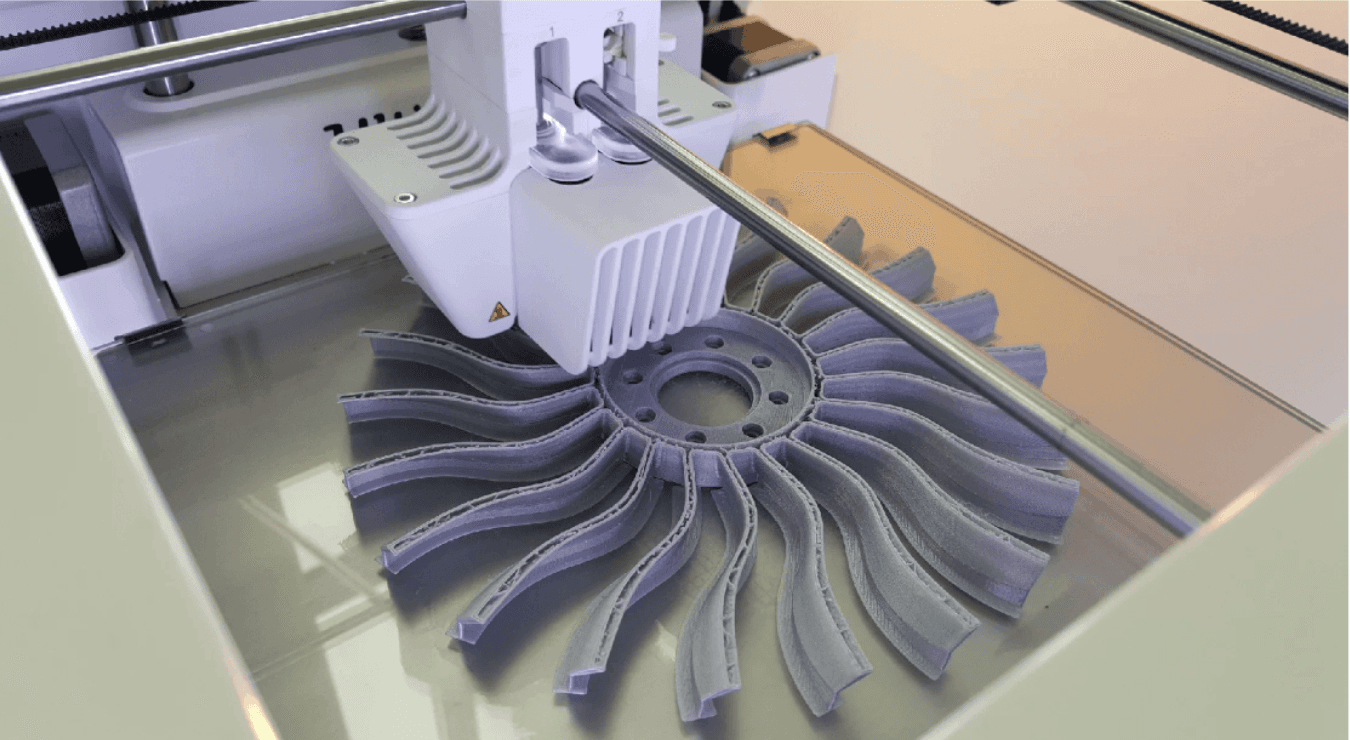
Additive Manufacturing Is Becoming a Production Tool, Not Just a Prototyping Shortcut
Additive manufacturing is shifting from rapid prototyping to producing functional, flight-ready components.
Additive manufacturing - 3D printing, in plainer terms, has been part of the aerospace conversation for years, mostly as a way to build prototypes faster. That role is changing. Industry data now shows the overwhelming majority of manufacturers using additive manufacturing for functional, end-use parts, not just throwaway test pieces, and aerospace remains one of the technology's heaviest adopters.
The reason is straightforward physics: aerospace parts need to be light, strong, and often geometrically complex in ways that traditional machining struggles with. Additive processes let engineers design lattice structures and internal geometries that would be impossible or absurdly expensive to produce through casting or subtractive machining. The result, in well-documented industry cases, is components that are dramatically lighter and more durable than their conventionally manufactured equivalents.
What's shifted the conversation in 2026 is the materials side. Earlier additive manufacturing was constrained to a narrow set of plastics and a handful of metals. That list has expanded to advanced composites, high strength metal alloys, and multi-material structures engineered for specific load cases, meaning the technology now competes on parts that actually need to survive flight loads, not just look right on a bench.
This matters directly for structural design and prototyping work. When Wafi Engineering moves a component from CAD through structural testing, additive manufacturing increasingly sits in the middle of that pipeline rather than at the start used to produce test articles that are mechanically representative of the final production part, not just a shape to check fit and clearance. That closes the gap between simulation and physical validation considerably.
There's a quieter benefit too: supply chain resilience. A part that can be printed on demand, closer to where it's needed, is less exposed to the kind of global shipping and tariff disruptions that have made headlines across manufacturing sectors recently. For aerospace programs juggling long lead times on specialty alloys, that flexibility has real schedule value, not just a sustainability story.
The honest caveat: additive manufacturing isn't a universal replacement for traditional methods, and won't be soon. Surface finish, certification pathways, and per part cost at high volumes still favor conventional manufacturing in plenty of cases. The skill now is knowing which parts belong in which pipeline and that judgment call is where experienced engineering teams earn their keep.
Our approach blends custom hardware, system integration, and standard-compliant simulation methodologies. As technology continues to evolve, Wafi Engineering remains dedicated to delivering state-of-the-art engineering solutions that empower local industries and global partners to build cleaner, smarter, and more resilient systems for tomorrow.

Managing Director – Aerospace, Wafi Engineering
Experienced aerospace systems engineer managing high-fidelity CFD simulations and UAV prototyping lifecycles to deliver robust flight technologies.