

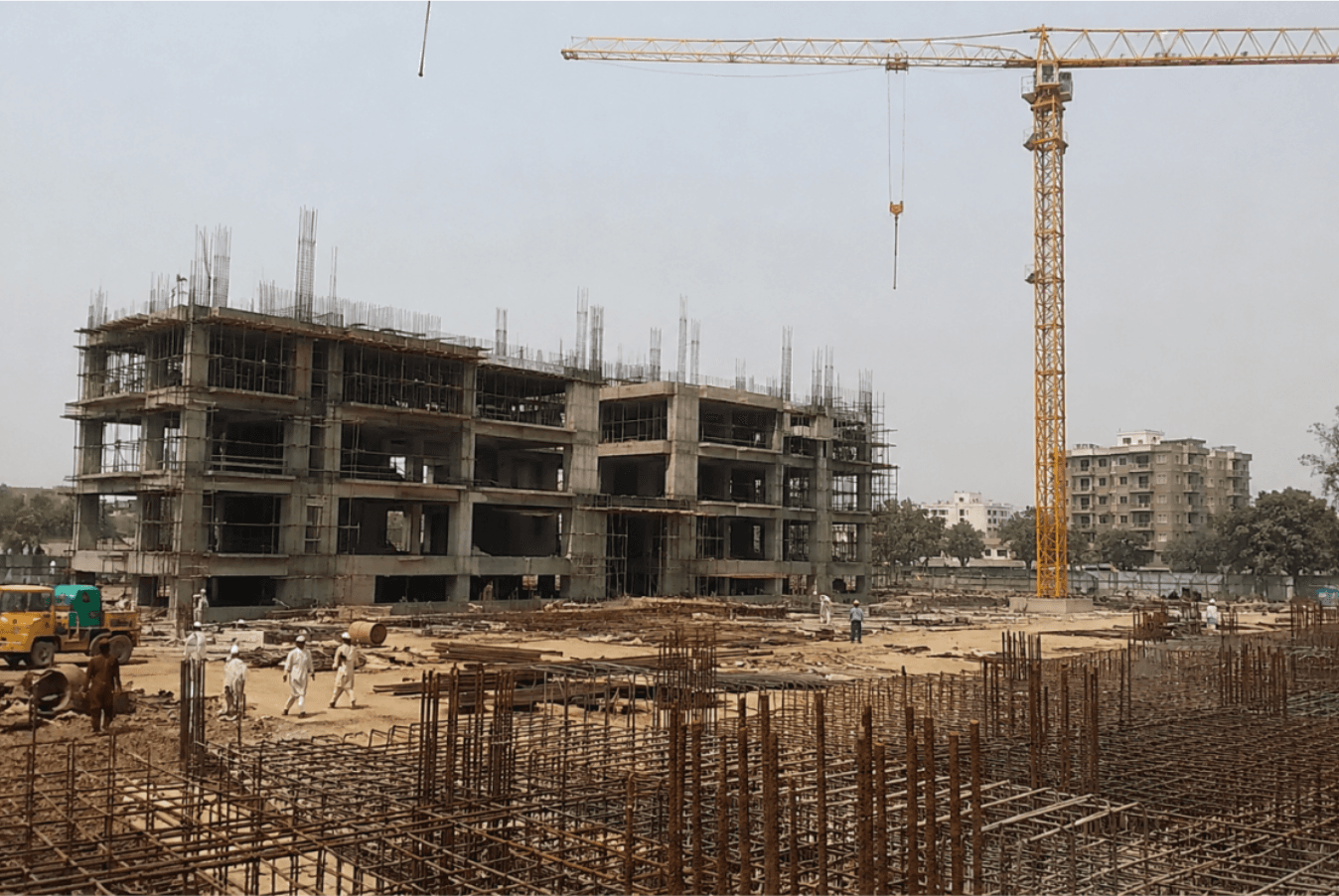
Embodied Carbon Is the Construction Industry's Next Big Reckoning
Whole-life carbon accounting takes center stage as concrete, steel, and shipping emissions come under scrutiny.
For years, "sustainable building" mostly meant operational efficiency, better insulation, efficient HVAC, lower utility bills once people moved in. That focus is broadening in 2026 toward something harder to see but arguably more important: embodied carbon, the emissions generated by manufacturing, transporting, and installing building materials before a structure is ever occupied.
The numbers explain why this shift is happening. Embodied carbon can account for a substantial share by some estimates, a fifth to half of a high performance building's total lifetime carbon footprint. A building can be operationally near perfect and still carry a heavy carbon cost baked into its concrete, steel, and glass before the first occupant moves in. Whole life carbon accounting, which tracks both operational and embodied emissions together, is moving from a niche practice toward something close to standard expectation on major commercial developments.
This is changing material selection conversations in practical ways. Environmental Product Declarations standardized documentation of a material's lifecycle carbon footprint are increasingly expected on large contracts, not just requested as a nice to have. Recycled steel, sustainable timber, and lower carbon concrete alternatives are moving from premium options to default specifications on projects competing for certain certifications or public contracts.
There's also a quieter, less glamorous trend worth attention: the most sustainable building is sometimes the one that doesn't get built at all. Retrofitting and adaptive reuse of existing structures avoids the embodied carbon cost of new construction entirely, and renovations that preserve a building's structural envelope typically complete faster and cheaper than ground up construction a rare case where the sustainable choice and the economical choice point the same direction.
On Wafi Engineering's infrastructure projects including the commercial high rise work in our portfolio, these considerations now factor into material sourcing decisions from the earliest design stage, not as an afterthought layered onto a finished plan. That's a different sequencing than how sustainable construction conversations used to happen, and it's the sequencing that actually moves the carbon numbers.
For developers and clients commissioning new construction, the practical question worth asking early is simple: what's the embodied carbon of the materials being specified, and is there a lower carbon alternative that doesn't compromise structural performance? Five years ago that question rarely came up. By 2026, on serious commercial projects, not asking it is becoming the exception.
Our approach blends custom hardware, system integration, and standard-compliant simulation methodologies. As technology continues to evolve, Wafi Engineering remains dedicated to delivering state-of-the-art engineering solutions that empower local industries and global partners to build cleaner, smarter, and more resilient systems for tomorrow.

Managing Director – Sustainable Infrastructure, Wafi Engineering
Infrastructure engineer specializing in large-scale residential designs, solar power integration, and smart sustainable construction engineering.