

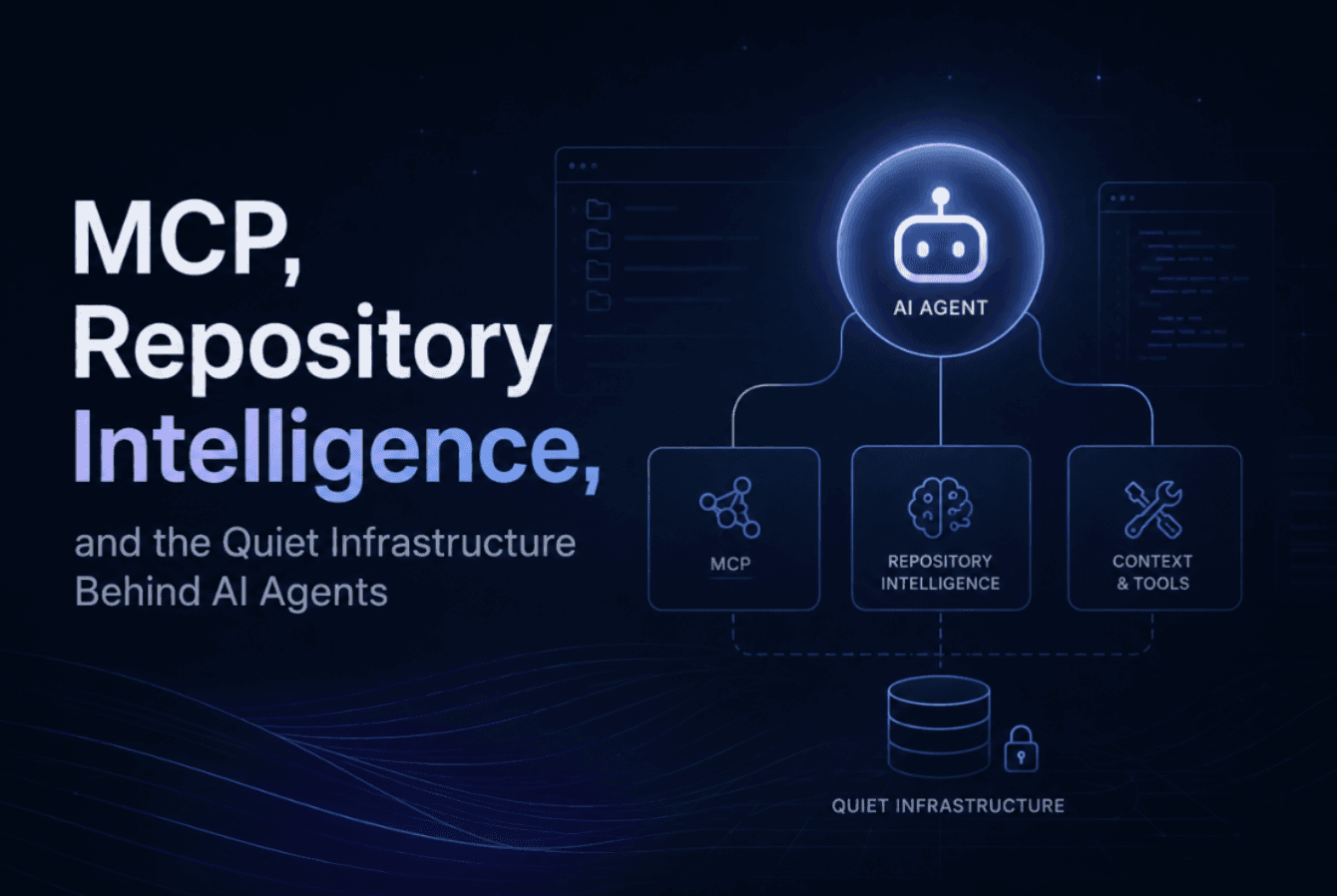
MCP, Repository Intelligence, and the Quiet Infrastructure Behind AI Agents
Standardized protocols like Model Context Protocol and repository intelligence are laying the quiet groundwork for mature agentic systems.
Most conversations about AI agents focus on what they can do. Fewer focus on the plumbing that makes coordinated, multi-agent work possible at all and that plumbing is becoming one of the more interesting software stories of 2026.
Model Context Protocol (MCP) is a useful case study. Earlier in the year, developer sentiment toward MCP was openly skeptical setup friction and token overhead made it feel like unnecessary complexity for tasks a direct command-line call could handle more cheaply. That skepticism wasn't wrong for narrow, single-tool tasks. But as agentic workflows have matured into systems that coordinate multiple specialized tools and data sources, MCP's standardized way of connecting agents to external systems has seen a clear resurgence search interest and real usage data both point the same direction.
Alongside that, "repository intelligence" has emerged as a distinct capability: AI that understands not just individual lines of code, but the relationships, history, and intent behind a codebase's structure. That's a meaningfully harder problem than autocomplete, and it's what allows an agent to make a sensible change in an unfamiliar dependency rather than a technically valid-but contextually wrong one.
For organizations building internal tools or customer facing platforms, this shift has a practical implication: integration architecture matters more than it used to. A system designed with clean, well-documented interfaces between services is far easier for an AI agent or a new human engineer, for that matter to reason about correctly. Technical debt that was merely inconvenient under human only development becomes actively dangerous when an autonomous agent is making changes based on an incomplete or confusing picture of how pieces connect.
This is the layer Wafi Engineering's digital technology team pays close attention to when building cloud and edge systems: not just whether a feature works today, but whether the system's structure will still make sense to the next engineer human or AI who has to extend it six months from now.
The broader trend worth watching is security. As agents gain real permissions reading files, calling APIs, taking actions on a system's behalf the same access that makes them useful makes a mistake more costly. Treating every agent with an identity, a scoped set of permissions, and an audit trail isn't excessive caution; in 2026, it's quickly becoming baseline practice for anyone running agents against production systems.
Our approach blends custom hardware, system integration, and standard-compliant simulation methodologies. As technology continues to evolve, Wafi Engineering remains dedicated to delivering state-of-the-art engineering solutions that empower local industries and global partners to build cleaner, smarter, and more resilient systems for tomorrow.

Lead Web Developer & Designer, Wafi Engineering
Full-stack developer and designer focused on crafting high-performance modern web platforms and seamless user interfaces with premium interactive experiences.