

Precision Manufacturing's New Constraint Isn't Machines, It's Materials
As heat-resistant super alloys and advanced carbon-composites become standard, tool-path engineering must adapt to new material limits.
There's a useful paradox shaping precision manufacturing in 2026: engineering design is moving faster than ever, while the materials those designs depend on are getting harder to machine reliably. As heat resistant super alloys and advanced composites become standard rather than exceptional in high-performance components, manufacturers are running into a gap between what's possible to design and what's practical to produce at scale.
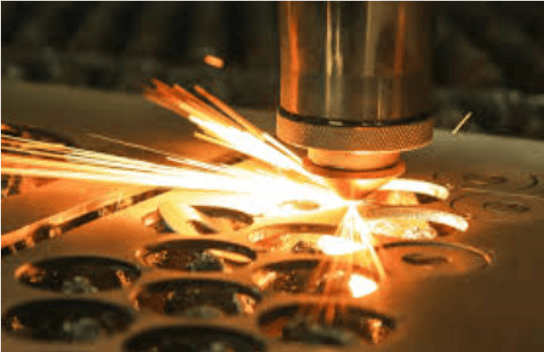
The specific problem is heat. Heat resistant super alloys, increasingly common in demanding mechanical and aerospace adjacent applications, are exactly that resistant to heat, which makes them resistant to the cutting and shaping processes manufacturers rely on too. The industry response has been a shift toward high pressure, through tool coolant systems and refined chip breaking strategies that manage heat at the point of contact rather than fighting it after the fact. It's a less glamorous innovation than a new material breakthrough, but it's the kind of process discipline that actually determines whether a part comes off the line within tolerance or gets scrapped.
Automation is following a similar pattern of practical, incremental adoption rather than dramatic transformation. Rather than large, fully automated production cells, many manufacturers are adopting smaller modular setups, automation sized to run lights out during off hours and increase spindle utilization during the day, without requiring a complete factory redesign. That's a meaningfully different strategy than the "smart factory of the future" narrative often suggests, and it's a more honest reflection of how capital constrained manufacturers are actually investing right now.
Adaptive machining, where each part is measured during production and the tool path adjusts in real time based on that measurement, is becoming standard practice for complex, expensive parts that can't afford rework. When a single component in thin-walled, high value material represents significant cost, the economics clearly favor a process that catches deviation mid production over one that discovers it during final inspection.
This is the same discipline Wafi Engineering applies across our engineered product solutions work: in process measurement and verification aren't treated as quality control bolted onto the end of manufacturing, but as part of the production process itself because for precision components, that's the difference between catching a deviation while it's still fixable and discovering it after the part is already scrapped.
The broader lesson for manufacturers evaluating where to invest: capital efficiency now matters more than raw capacity expansion. Getting more reliable output from existing equipment through better process control is, for most mid sized manufacturers in 2026, a better bet than simply buying more machines.
Our approach blends custom hardware, system integration, and standard-compliant simulation methodologies. As technology continues to evolve, Wafi Engineering remains dedicated to delivering state-of-the-art engineering solutions that empower local industries and global partners to build cleaner, smarter, and more resilient systems for tomorrow.

Chief Operating Officer, Wafi Engineering
Operational excellence expert ensuring seamless execution of complex engineering projects across all business verticals.